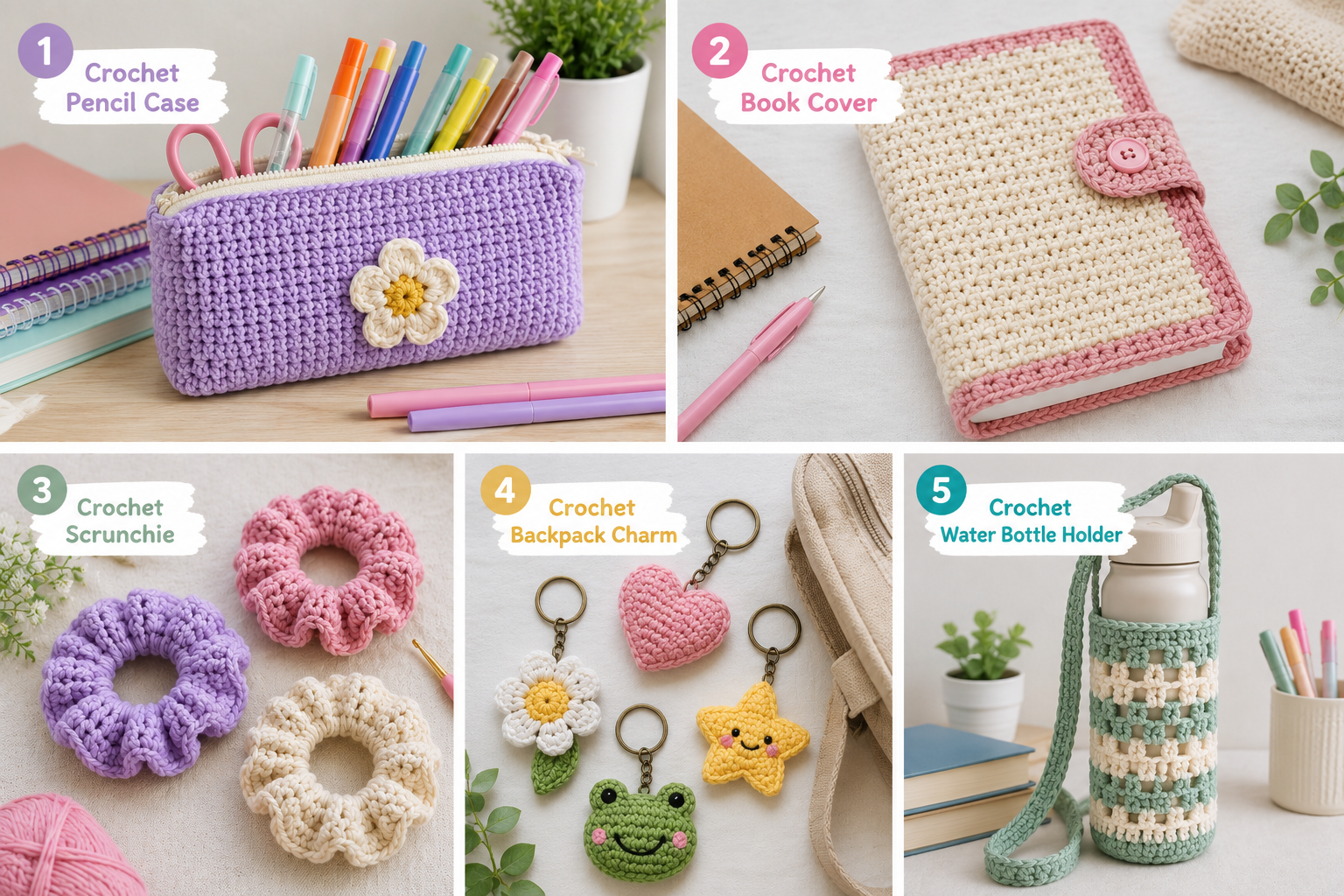
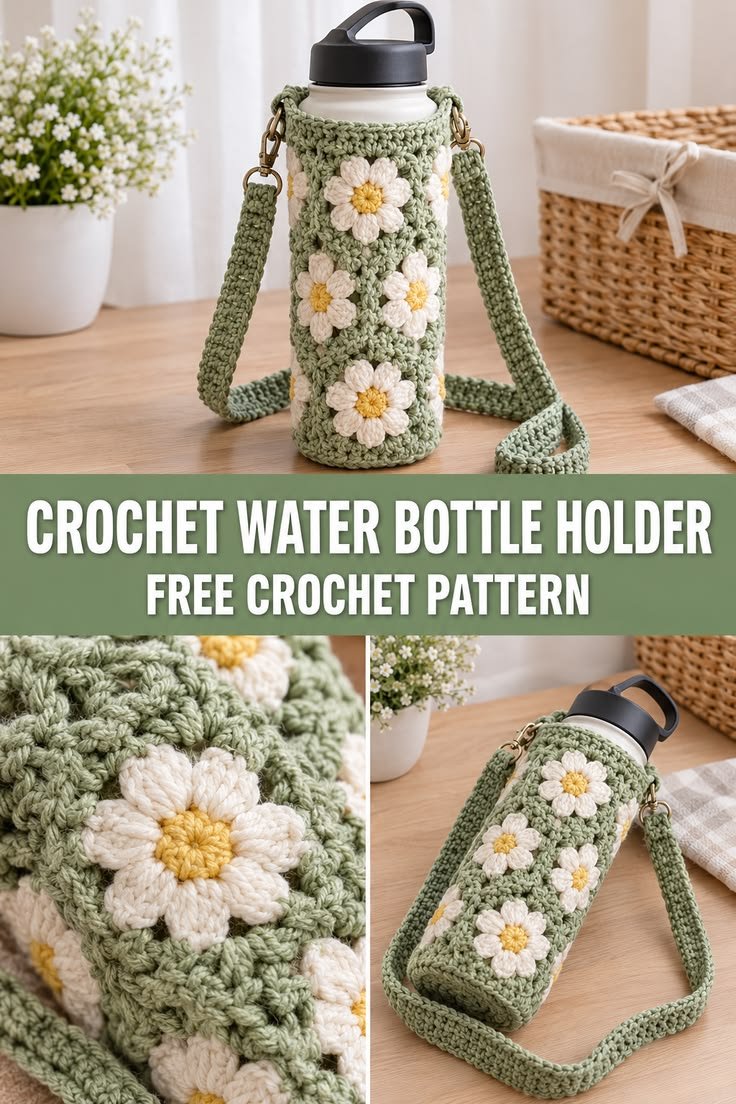

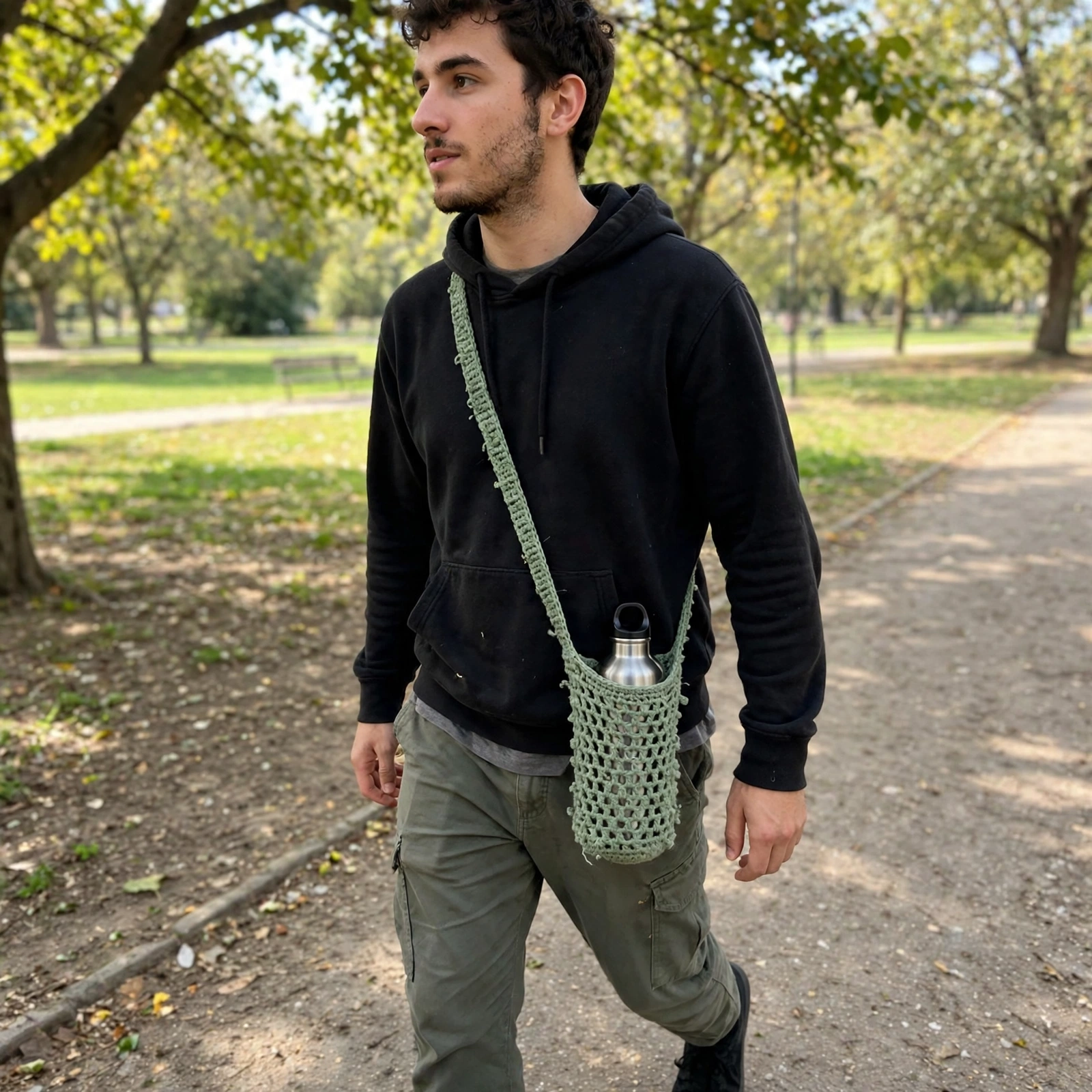
Some crochet projects are pretty. This one is pretty and it will leave the house with you every single day. A crochet water bottle holder — a soft mesh carrier with a long strap, worn crossbody or over the shoulder — keeps your bottle close and your hands free on walks, school runs, market days, hikes and festivals. It is also one of the fastest useful things you can crochet: most versions take an evening or two.
Here is why this little carrier earns its keep, what makes a good one, how to choose your yarn — and three free water bottle holder patterns from lovely designers to start with.
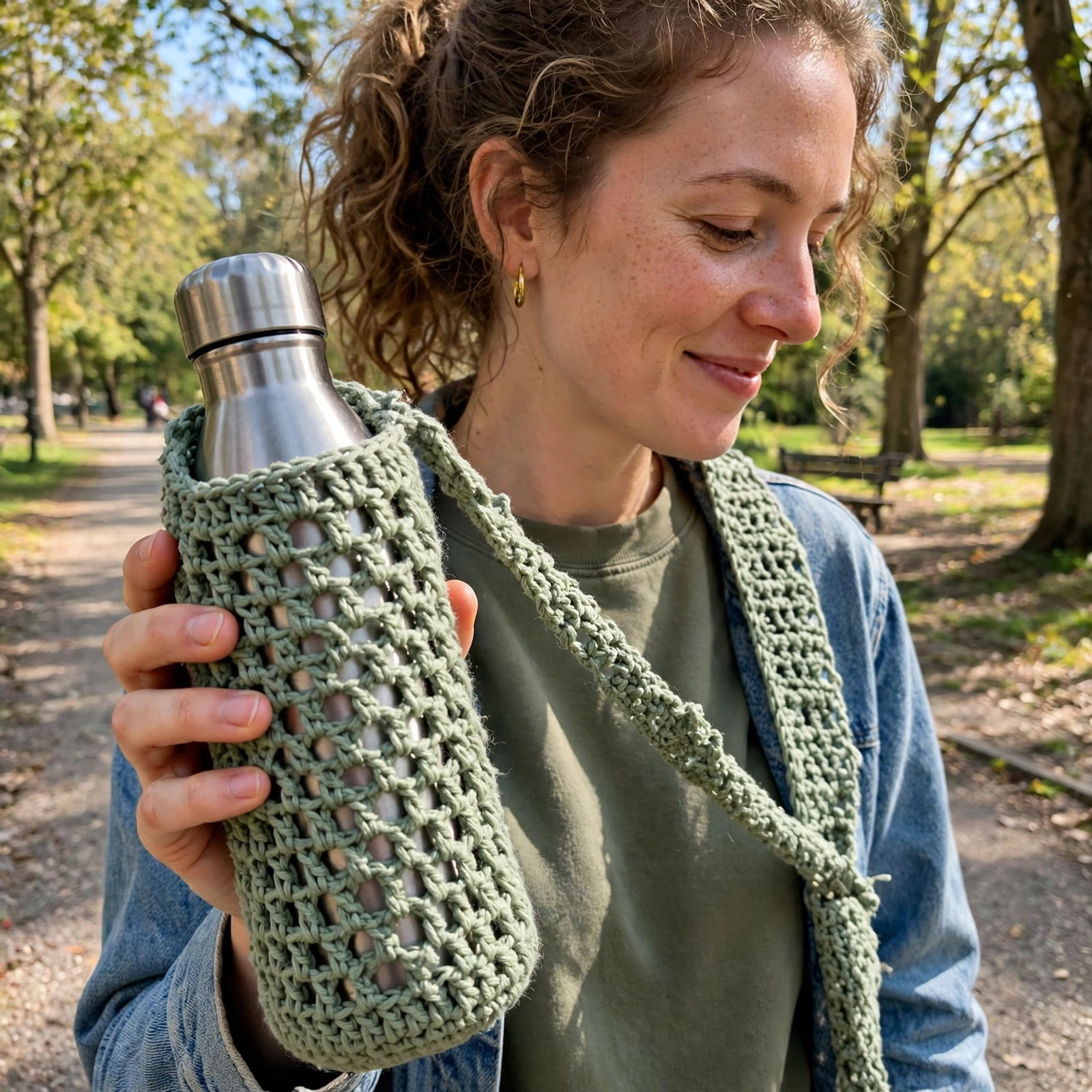
Why You’ll Use It Every Day
- Hands free, always — dog lead in one hand, coffee in the other, bottle sorted.
- You actually drink more — a bottle riding at your hip is a bottle you sip from; hydration becomes a habit, not a chore.
- No more juggling — no bottle rolling around the car footwell, leaking in your tote, or left behind on a bench.
- Condensation-friendly — the classic open mesh body lets a cold bottle breathe and dry instead of sweating into your bag.
- A genuinely great gift — quick, inexpensive, personal, and sized to the reusable bottle everyone already owns.
Anatomy of a Good Bottle Holder
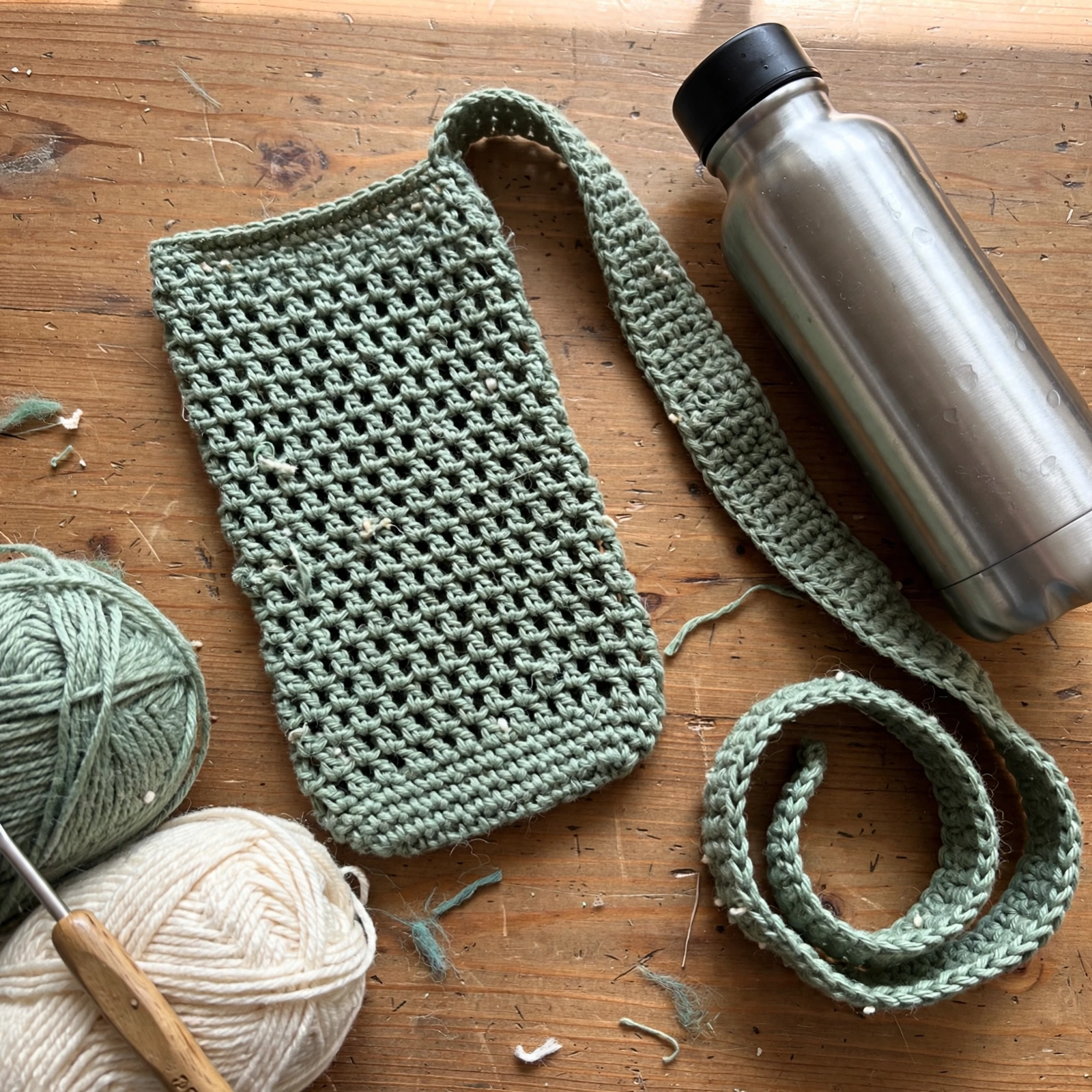
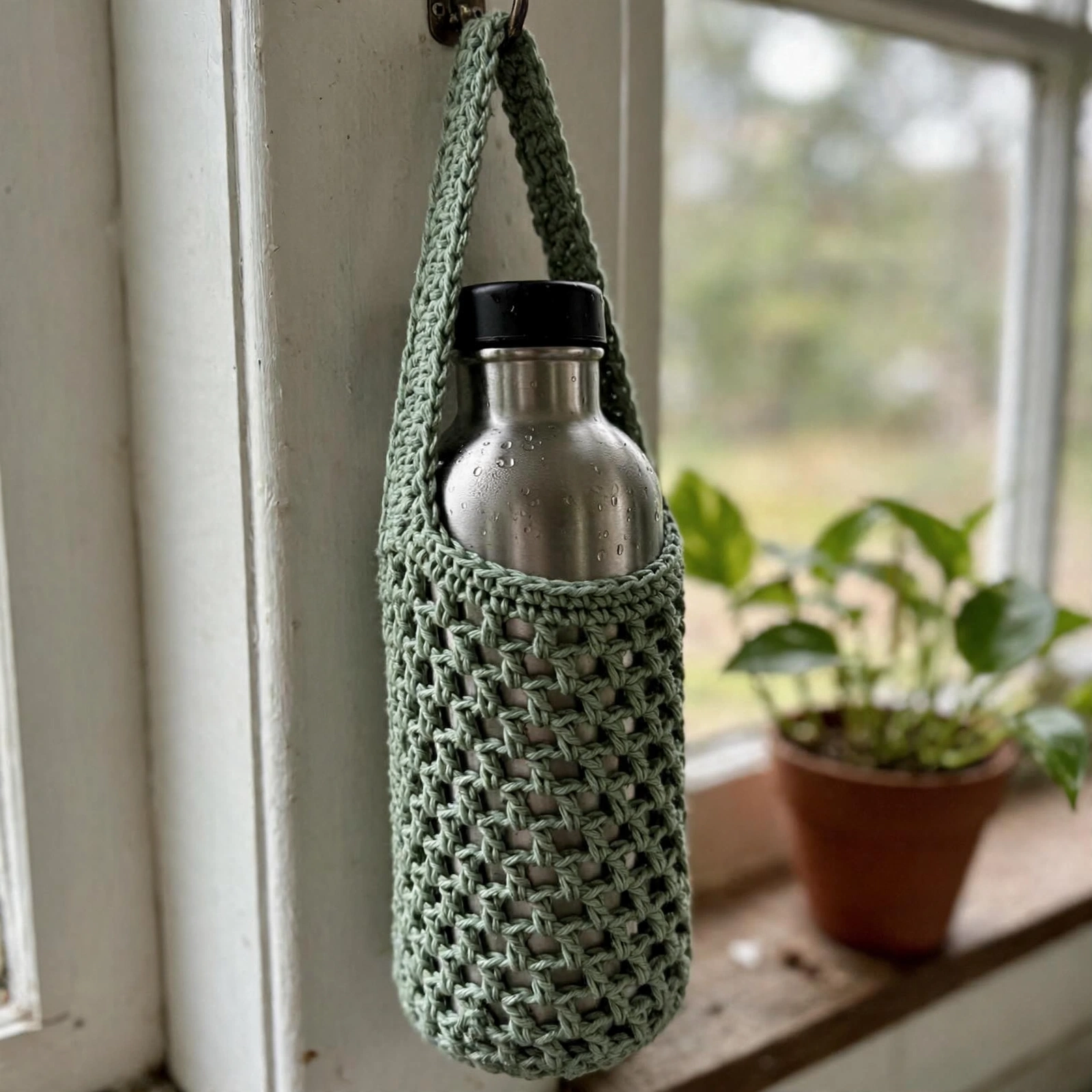
- A sturdy, flat base — a solid crocheted bottom means the bottle stands upright when you set it down, instead of toppling over.
- An airy mesh body — stretchy openwork hugs different bottle shapes, keeps the weight down and dries fast.
- A long, strong strap — worn crossbody it distributes the weight of a full bottle comfortably; the best straps are dense enough not to stretch out of shape.
- Thoughtful extras — some designs add a front phone pocket, an adjustable strap, or a little bow or flower detail.
Yarn: Cotton Is King
If you take one tip from this post, take this one: choose cotton (or a cotton blend). A full litre bottle is heavy, and cotton barely stretches under that weight, holds the mesh shape, and washes beautifully after a summer of park days. Acrylic works and is budget-friendly, but expect a little more give over time. Worsted (#4) cotton with a 4.0 mm hook is the classic combination; a few patterns use DK for a lighter carrier. As a rough guide, most holders need only about 100–180 yards — a single ball often does it.
Getting the Fit Right
- Measure your bottle — its diameter and height are the only two numbers that matter; most patterns fit the common 500–700 ml reusables, and the mesh forgives a lot.
- Strap length is personal — crossbody wearers usually like the bottle resting at the hip; many patterns let you simply work the strap longer or shorter.
- Kids’ bottles too — scale down with a smaller bottle and a shorter strap for school bags and days out.
3 Free Water Bottle Holder Patterns to Try
1. Crochet Water Bottle Holder — Crochet Step By Step. The all-rounder: a sturdy flat base, an airy mesh body, a comfortable crossbody strap — and a clever front pocket sized for your phone. Written for worsted cotton and everyday 500–700 ml bottles. Get the free pattern at Crochet Step By Step.
2. Crochet Water Bottle Holder — Viv Crochets. The adjustable one: clear notes for fitting any bottle size, worn on the shoulder or crossbody, finished with a sweet bow — and a full video tutorial to crochet along with. Get the free pattern at Viv Crochets.
3. Easy Crochet Water Bottle Holder — Jenny and Teddy. The beginner favourite: a simple three-part make (base, mesh height, strap) in DK or worsted yarn, with a step-by-step video. A perfect first “useful” project. Get the free pattern at Jenny and Teddy.
Frequently Asked Questions
Is a bottle holder beginner friendly? Very — if you can work in the round and make basic stitches, you have the skills. It is small, quick and forgiving.
Will it fit a big 1-litre bottle? Many patterns are adjustable — the mesh stretches, and designers usually note how to widen the base or add height. Check the notes in your chosen pattern.
How do I wash it? Cotton holders machine-wash happily and dry flat. That is another reason cotton wins for something that lives outdoors.
Can I sell holders I make? Finished items are usually fine to sell at markets — but check the individual designer’s terms on their pattern page first, and always credit the design.
Sage green like the photos, or a rainbow stripe from your leftover stash? Pin this post for your next market-day make — and happy crocheting!

 By