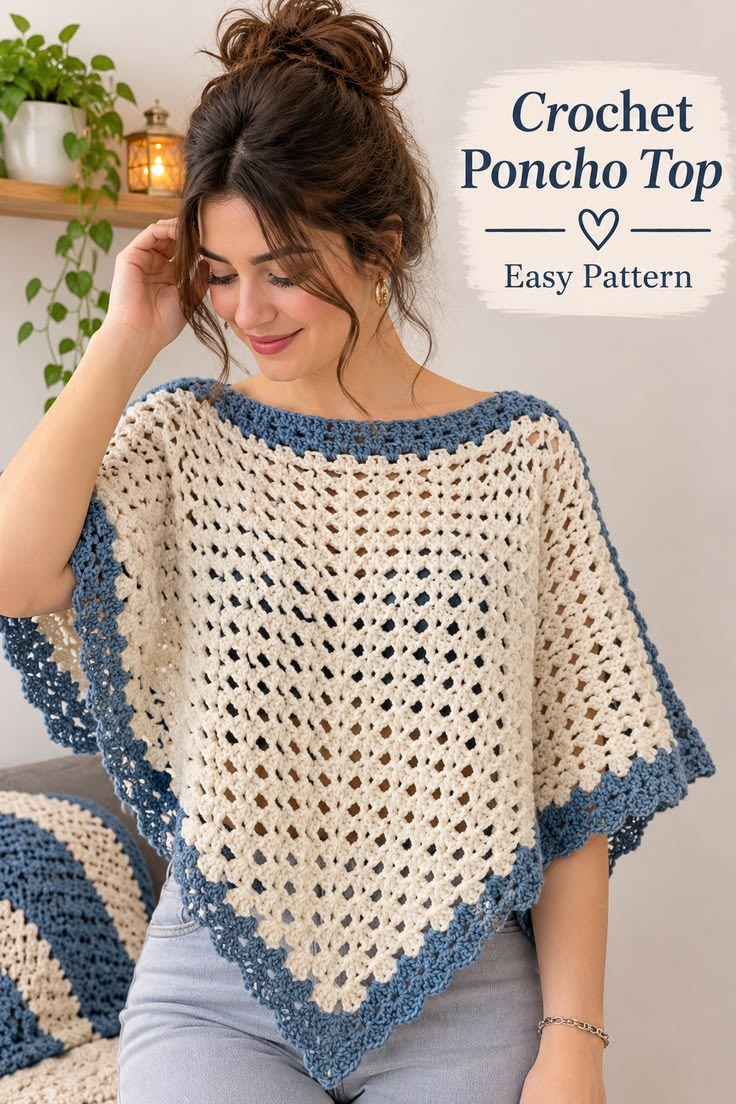

Light, breezy and effortlessly pretty, this crochet poncho top is the layer your spring and summer wardrobe has been waiting for. Worked in a cream openwork diamond mesh with a dusty-blue trim framing every edge, it floats over jeans, dresses and camisoles, adding handmade texture without a scrap of warmth you do not want. The wide boat neckline, the relaxed poncho drape and that elegant pointed hem give it a boutique feel — yet the construction is wonderfully simple, which is exactly why this design has become one of the most-saved crochet tops on our Pinterest.
In this post we look at the poncho top in detail: how it is constructed, why the openwork stitch and contrast edging work so well together, the yarns that suit it best, and how to style and vary it for your own wardrobe.
Quick Facts
- Item: Crochet poncho top (short poncho-style summer sweater)
- Style: Openwork diamond mesh with solid contrast trim in dusty blue
- Fit: Relaxed and drapey, wide boat neckline, wide open sleeve edges, pointed front hem
- Skill level: Easy — a repeating stitch pattern and simple panel construction
- Yarn: Cream main colour with a dusty-blue contrast; cotton or cotton-blend suits it best
- Wear it: Over jeans, dresses, camisoles and swimwear, spring through summer
Why This Crochet Poncho Top Works So Well
A poncho top is the friendliest shape in crochet clothing. There are no sleeves to fit, no waist shaping to calculate and no button bands to line up — the garment is essentially two generous panels that drape from the shoulders, so it flatters every body and forgives every small tension wobble. Worn here with simple light-wash jeans, it turns a basic outfit into a styled one in seconds.
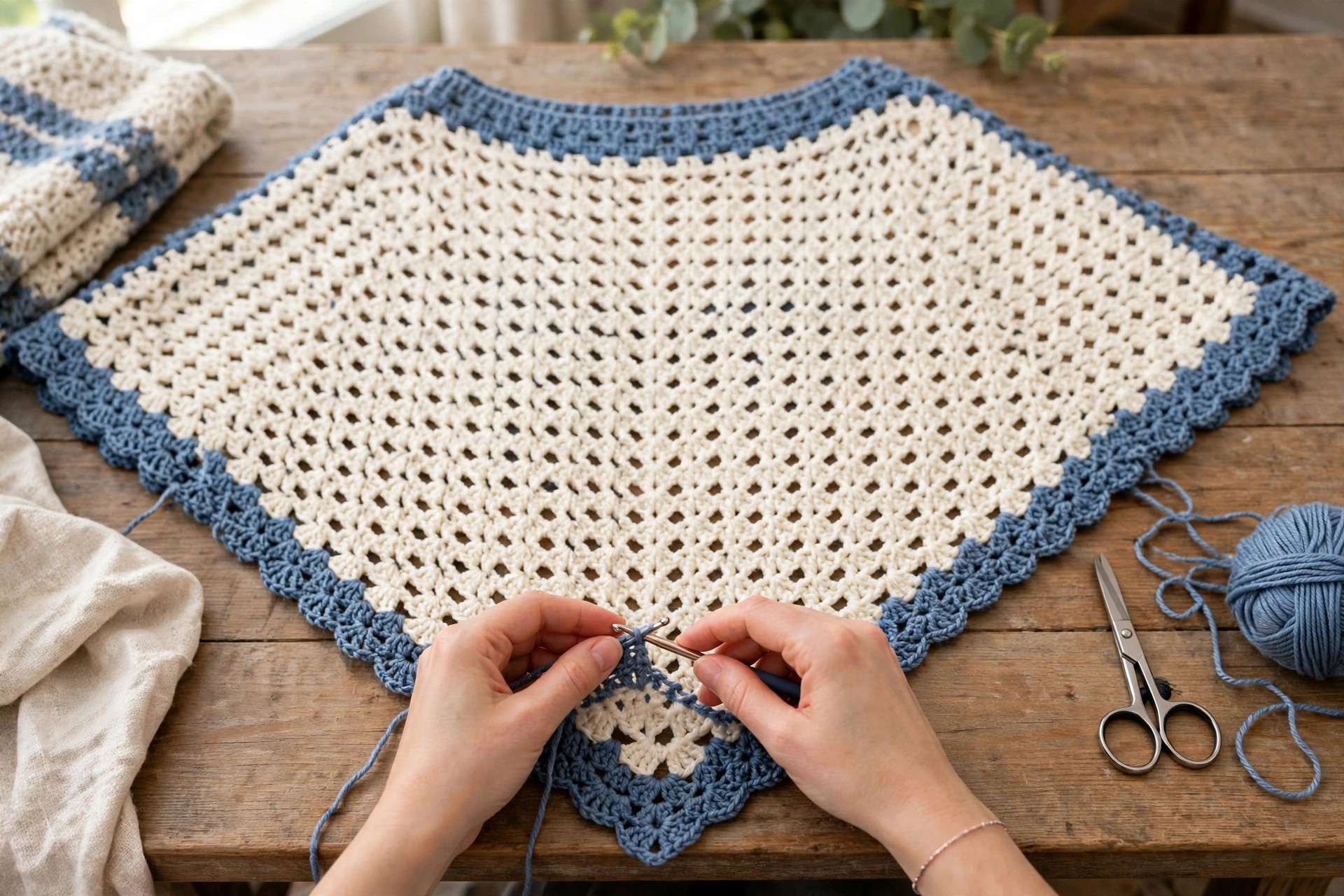
The stitch choice does the rest. The openwork diamond mesh keeps the fabric airy and light, full of little windows that let a breeze — and the colour of whatever you wear underneath — show through. Against that lacy cream ground, the solid dusty-blue edging acts like a frame on a picture: it sharpens the neckline, defines the wide sleeve openings and traces the pointed hem, so the whole piece looks deliberate and finished rather than floaty and vague. It is a colour pairing worth stealing, too — cream and dusty blue is soft, coastal and endlessly wearable.
How the Poncho Top Is Made — Construction in Detail
Understanding the construction shows why this top is such a satisfying make: a small number of simple ideas, repeated calmly, add up to a garment that looks far more complex than it is.
The diamond mesh body
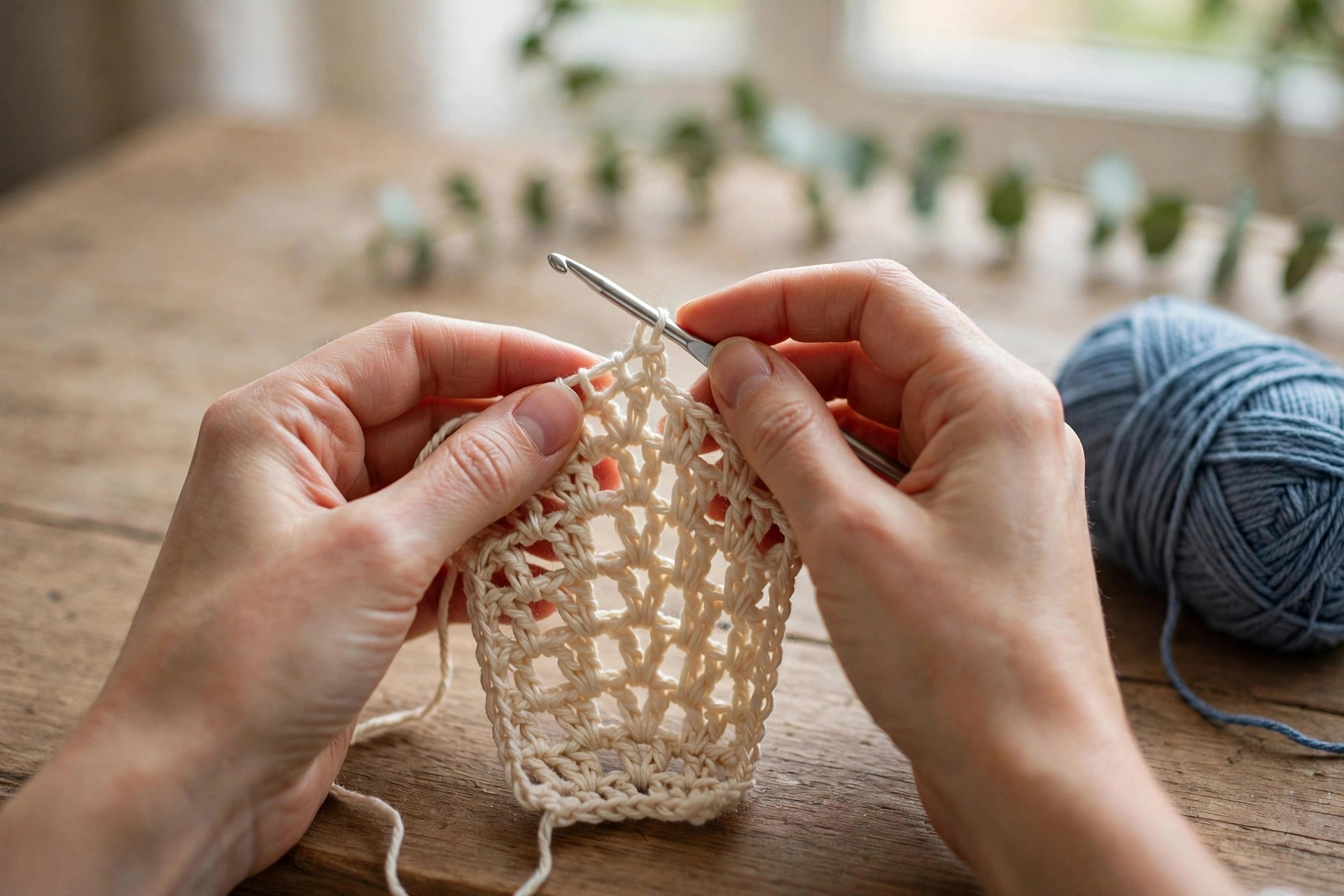
The body of the poncho is worked in an openwork diamond mesh — a repeating pattern of cluster stitches and chain spaces that builds neat diagonal rows of diamonds across the fabric. Because the pattern repeats every few rows, it settles into a rhythm quickly: after the first few repeats you barely need to look at your hands, which makes this a lovely relaxed project. The mesh is worked at a tension that keeps the diamonds open and even, giving the finished top its light, net-like drape while still feeling substantial enough to wear over a camisole.
Panels, shoulders and the pointed hem
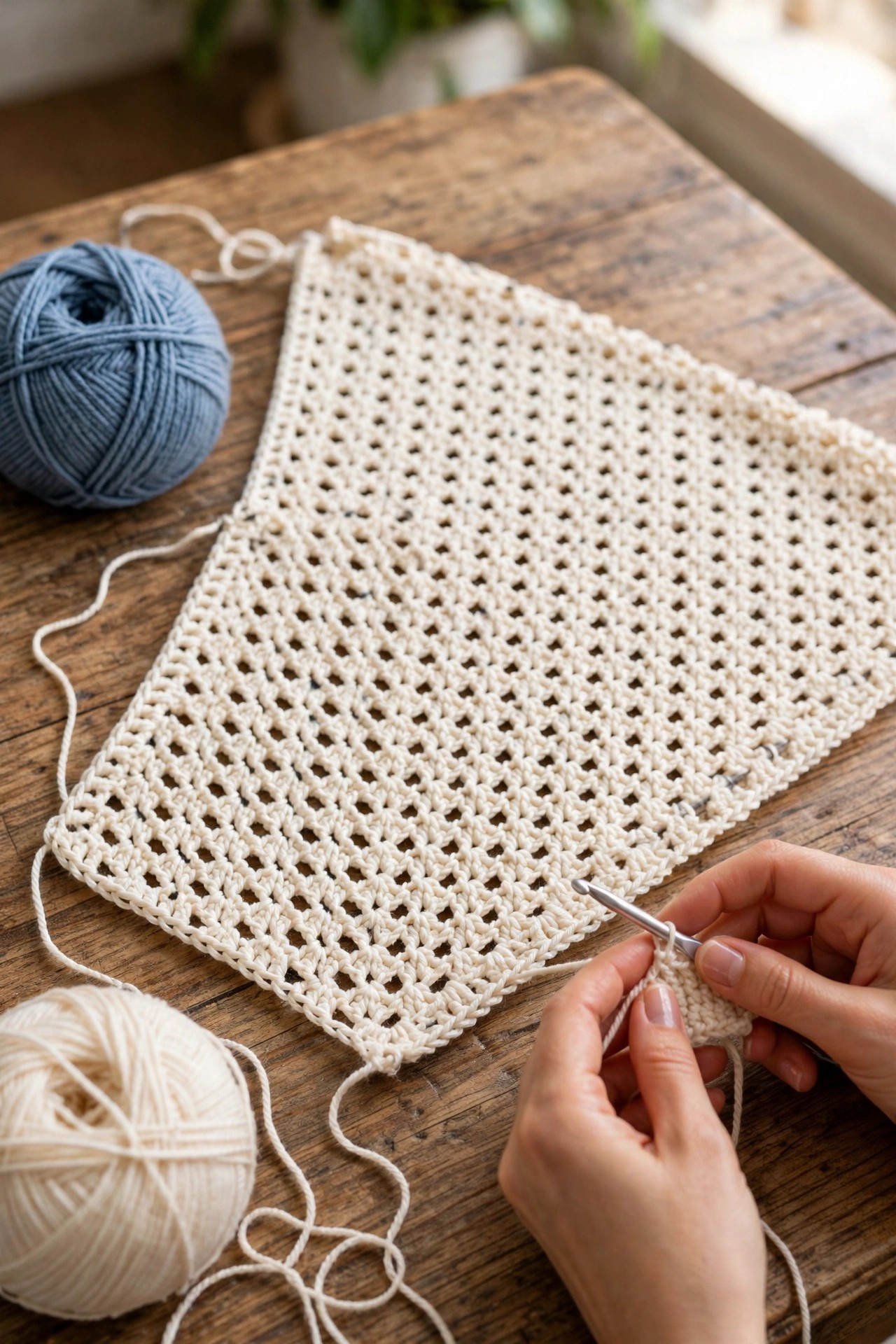
The classic poncho-top construction uses two matching panels, front and back. Each panel is worked flat, and the lower edge is shaped into the design’s signature point: the centre of the hem dips into a gentle V while the sides sit higher, exactly as you can see in the photo, where the point falls softly over the front of the jeans. The panels are joined at the shoulders, leaving a wide opening for the boat neckline, and the sides are seamed only partway up, so the lower side edges stay open and wide — those open sides are what act as the poncho’s short, breezy sleeves. No separate sleeve pieces, no setting in, no fuss.
The contrast edging
The final step is the one that pulls everything together: rows of solid stitching in the contrast colour worked around every raw edge — the neckline, both sleeve openings and the full pointed hem, finishing in the soft scalloped border you can see tracing the point. The edging does three jobs at once. It neatens and strengthens edges that get handled every time the top is put on; it stops the mesh from stretching out of shape; and it provides that crisp blue frame that makes the cream lacework pop. Changing only this edging colour is also the fastest way to make the same top look completely different.
Materials That Suit This Top
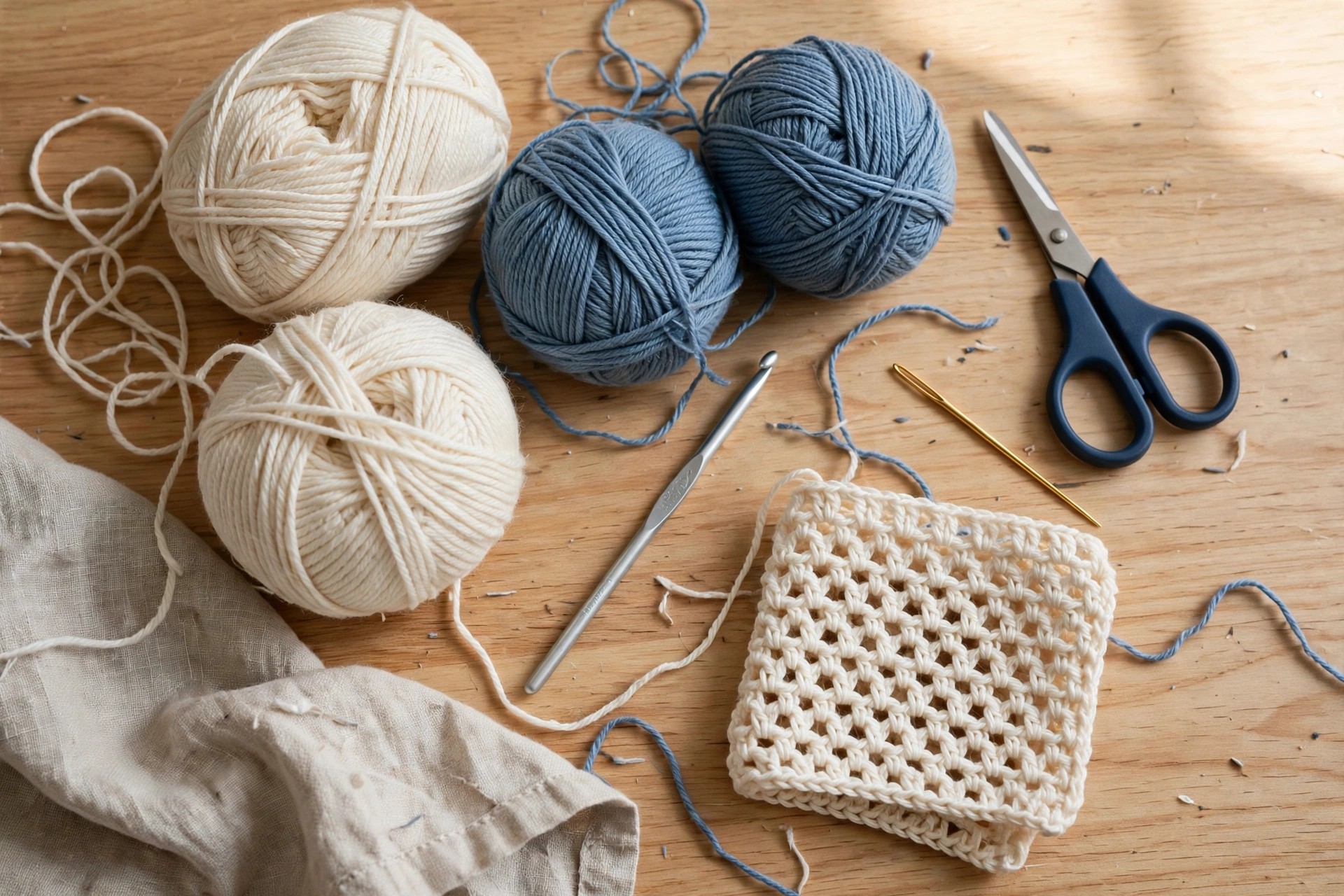
For a summer poncho top, fibre matters as much as colour. A cotton or cotton-blend yarn in a DK or light worsted weight is the classic choice: cotton gives the diamond mesh crisp definition, drapes coolly against the skin, breathes in warm weather and holds the pointed hem’s shape beautifully. A soft acrylic or acrylic-cotton blend also works well and keeps the colours — that clean cream and dusty blue — bright wash after wash. You need a main-colour quantity suitable for a loose top in your size, plus a smaller amount of the contrast colour for the edging; because the mesh is openwork, the top uses noticeably less yarn than a solid-stitch sweater of the same size. Add a hook matched to your yarn, a yarn needle for the shoulder and side seams and for weaving in ends, and scissors — that is the whole kit.
Styling Ideas
- With jeans (as pictured): the everyday classic — light or mid-wash denim, hair up, and the poncho does all the work.
- Over a summer dress: throw it over a plain slip or sundress to add texture and a little shoulder coverage for evenings.
- Beach and holiday: the open mesh makes a perfect swim cover-up layer that dries fast and packs small.
- Over a camisole or fitted tee: a coloured camisole underneath shows through the diamonds and changes the whole look.
- Transitional weather: layer it over a long-sleeved top in early autumn — the poncho shape slips over layers without bulk at the arms.
Variations to Try
The panel construction makes this top endlessly adaptable. Work it longer for a tunic-length poncho that skims the hips, or add a soft fringe along the point for a boho festival feel. A single colour throughout — all cream, or all soft sage — reads elegant and modern, while a gentle ombré or a striped sequence of leftover colours makes a true stash-buster version. Swap the dusty blue for terracotta and the mood turns autumnal; choose white on white for a bridal-morning cover-up. You can also deepen the neckline edging into a wider collar band, or narrow the side seams for a closer, more top-like fit.
Care Tips
Openwork crochet rewards gentle handling. Wash the top cool and gentle — hand-washing is kindest — then roll it in a towel, and dry it flat, coaxing the pointed hem and scalloped edge back into shape with your fingers while it dries. Store it folded rather than on a hanger, since the mesh can stretch under its own weight at the shoulders. Treated this way, the diamonds stay crisp and the edging keeps its frame-like neatness season after season.
Frequently Asked Questions
Is a crochet poncho top easy for beginners?
Yes — it is one of the easiest crochet garments there is. The construction is two flat panels with simple seams, the stitch pattern repeats, and there are no sleeves or shaping charts to manage. A confident beginner who can work clusters and chains can make this top.
What yarn is best for a summer poncho top?
Cotton or a cotton blend in DK or light worsted weight. Cotton keeps the openwork diamonds defined, feels cool, and drapes beautifully. The cream-and-dusty-blue pairing in the photo is a classic, but any main colour with a contrasting edging works.
How does a poncho top fit? Is it one size?
The poncho shape is naturally forgiving: it drapes from the shoulders and skims the body, so one generously sized make suits a wide range of figures. Because you work the panels yourself, you can adjust the width and length as you go for a closer or more oversized fit.
What do you wear under a crochet poncho top?
Anything simple: a camisole, a fitted t-shirt, a summer dress or swimwear. The openwork mesh is designed to layer — the garment underneath becomes part of the look through the diamonds.
Does the pointed hem make it harder to make?
No. The point is formed by straightforward shaping at the lower edge of each panel as you work, and the contrast scalloped edging then traces and emphasises it. It looks intricate, but it is one of the simplest parts of the make.
Save It for Later
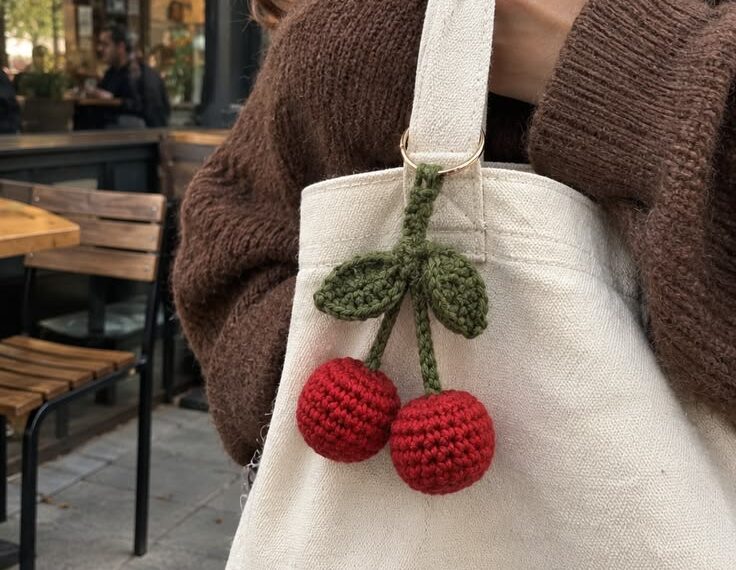
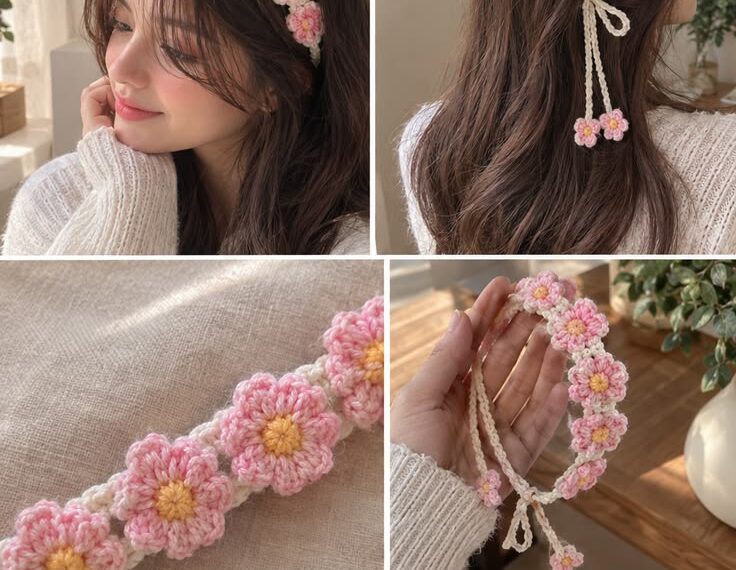
If this crochet poncho top has earned a place on your project list, save the pin so it is waiting for you, and take a look at our Crochet Cherry Bag Charm and Pink Daisy Crochet Headband for two quick accessories that pair beautifully with it. Happy crocheting!
🧶 Get the Complete Pattern Book
Love patterns like this? We sell complete crochet pattern books — every book is just $1.89 right now (was $6.90).
📚 Browse the Pattern Books

 By