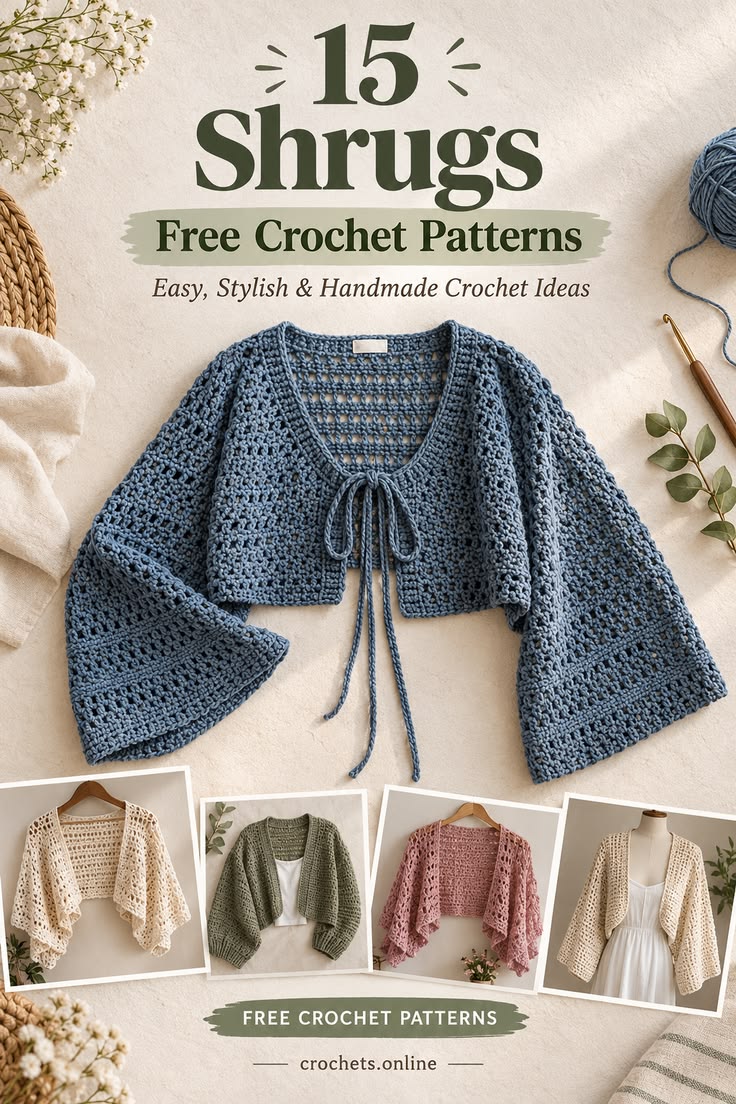

A shrug is the hardest-working layer in a handmade wardrobe: more than a scarf, less than a cardigan, and exactly right over a dress, a camisole or a plain white top. It is also one of the friendliest garments a crocheter can make — most shrugs are built from little more than a rectangle. No wonder crochet shrug patterns are having a moment; this collection of fifteen has become one of the most saved on our Pinterest.
Here is the full showcase: the five shrugs in the photograph in loving detail, ten more styles worth your yarn, how a shrug is actually constructed, and the fitting notes that make the difference between a shrug that drapes and one that fights you.
Quick facts
- Item: A showcase of 15 crochet shrug patterns and styles
- Star designs: Slate-blue bell-sleeve tie shrug, cream openwork waterfall shrug, sage cropped shrug, dusty rose lace shrug, long cream dress shrug
- Construction: Most shrugs begin as a flat rectangle, folded and seamed to form the sleeves — the easiest garment construction in crochet
- Yarn: DK or worsted, depending on the style — lace shrugs love cotton and bamboo blends
- Best for: Dresses that need sleeves, cool evenings, weddings, and anyone who finds cardigans too much commitment
The five shrugs in the photograph
1. The slate-blue bell-sleeve tie shrug
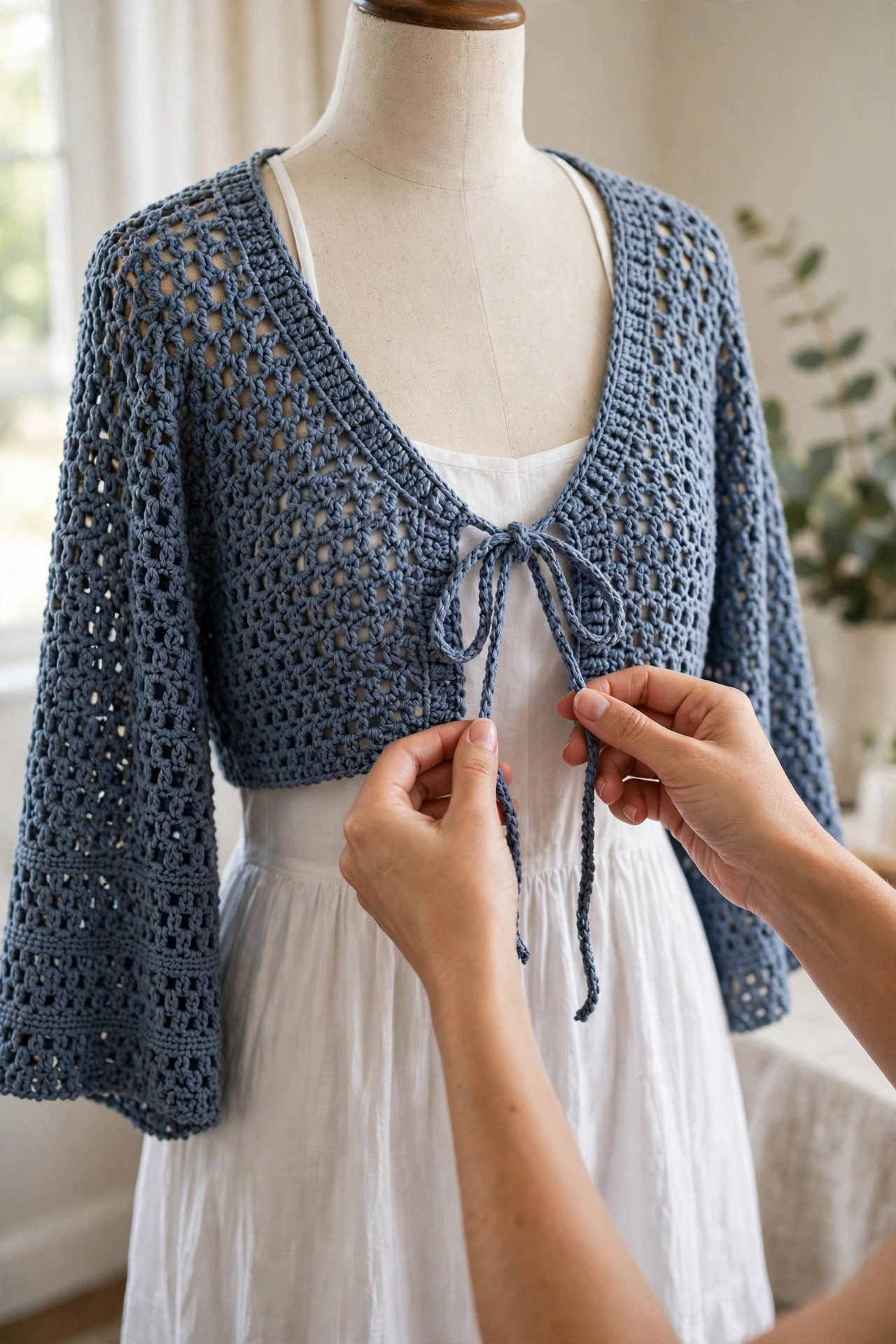
The cover star, and the one everyone saves first. A cropped, open-front shrug in a dusty slate blue, worked in an airy mesh stitch with denser bands at the edges. The wide bell sleeves are the drama — they flare from the elbow and turn a simple layer into an outfit. Two slim crocheted ties close the front, which means no buttons, no buttonholes, and a fit that adjusts itself. Worn over a white dress, it is the whole look.
2. The cream openwork waterfall shrug
The lightest of the five: an openwork cream shrug with a soft waterfall front that falls in gentle folds from the shoulders. On its hanger it looks almost like lace. This is the wedding-guest shrug — the one that covers bare arms over a sleeveless dress without hiding the dress, and the one bridesmaids are asked to make again and again.
3. The sage cropped shrug
The everyday one. A short, neat cropped shrug in sage green with tidy sleeves and a clean, close fit, shown over a simple white top. Where the blue shrug is romantic, this one is practical: it is the layer you reach for with jeans, skirts and everything in between, and its plain stitch lets the colour do all the work.
4. The dusty rose lace shrug
A cropped lace shrug in dusty pink, with an open, lacy stitch pattern and softly flared short sleeves. Pink lace over summer dresses is a combination that never really leaves fashion; it just waits for its season. This is the shrug that gets made as a gift, because the colour flatters almost everyone.
5. The long cream dress shrug
The most elegant of the set: a longer, openwork cream shrug with three-quarter sleeves, worn here over a white dress on a mannequin. The extra length makes it the most cardigan-like of the five, and the openwork keeps it light enough for summer evenings. In cream it goes with every dress in the wardrobe — which is precisely the point of it.
Ten more shrug styles worth making
6. The granny square shrug — squares joined into a rectangle, folded into sleeves; the classic scrap-yarn shrug. 7. The one-rectangle shrug — the simplest of all: one textured rectangle, two short seams, done. 8. The chunky winter shrug — bulky yarn and a big hook, finished in a weekend, worn like a hug. 9. The mesh beach shrug — pure chain-mesh, featherlight over swimwear. 10. The hooded shrug — a shrug with a soft hood added at the neckline, for lovers of cosy drama. 11. The long-sleeve bolero — the shrug’s tailored cousin, cropped high and neat. 12. The shell-stitch shrug — rows of shells give instant vintage softness. 13. The lacy wedding shrug — fine cotton, delicate motifs, made to be photographed. 14. The cropped cardigan shrug — buttoned, ribbed and tidy, for people who like their layers orderly. 15. The children’s shrug — the same rectangle idea, shrunk: one ball, one evening, one very pleased small person.
How a crochet shrug is made
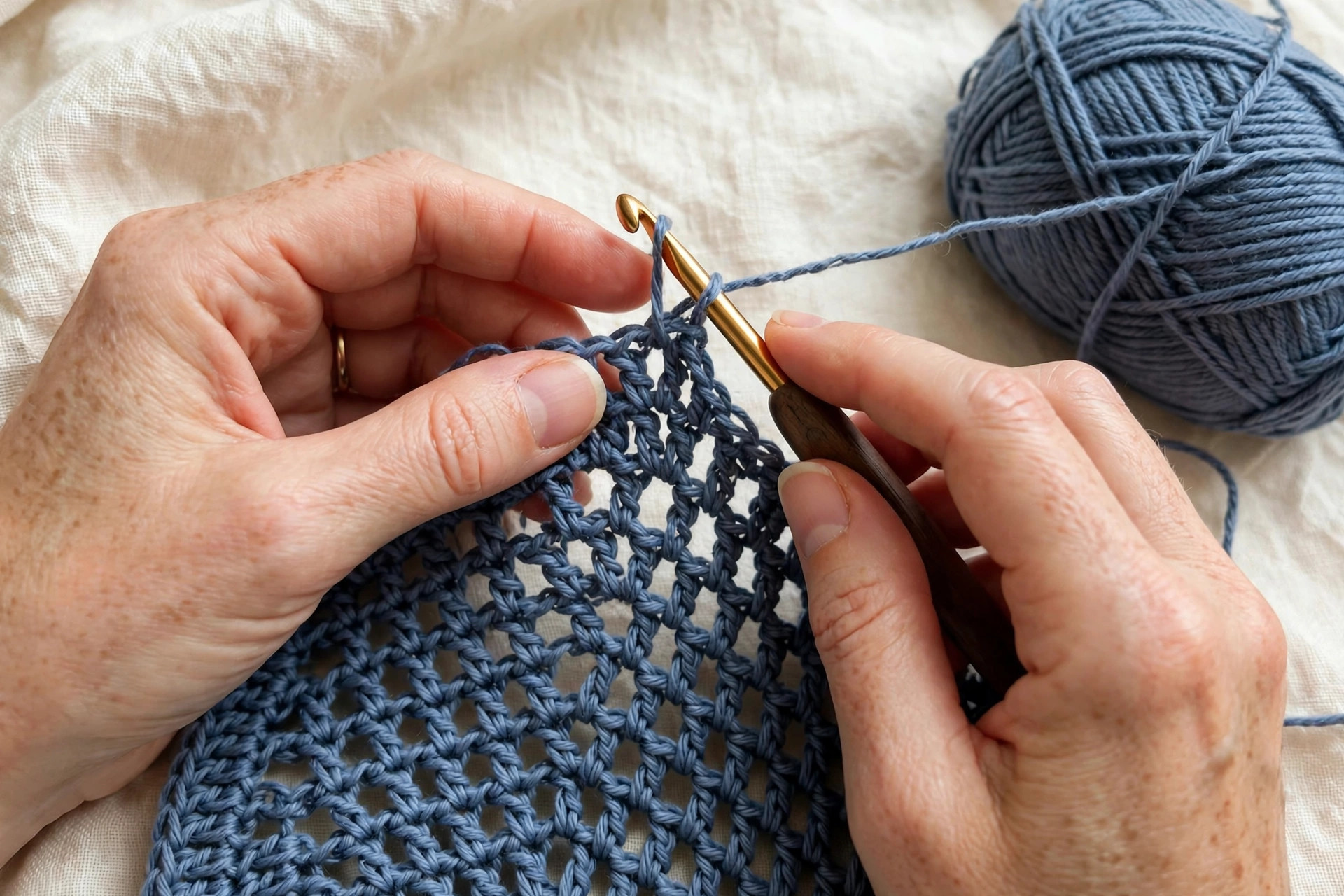
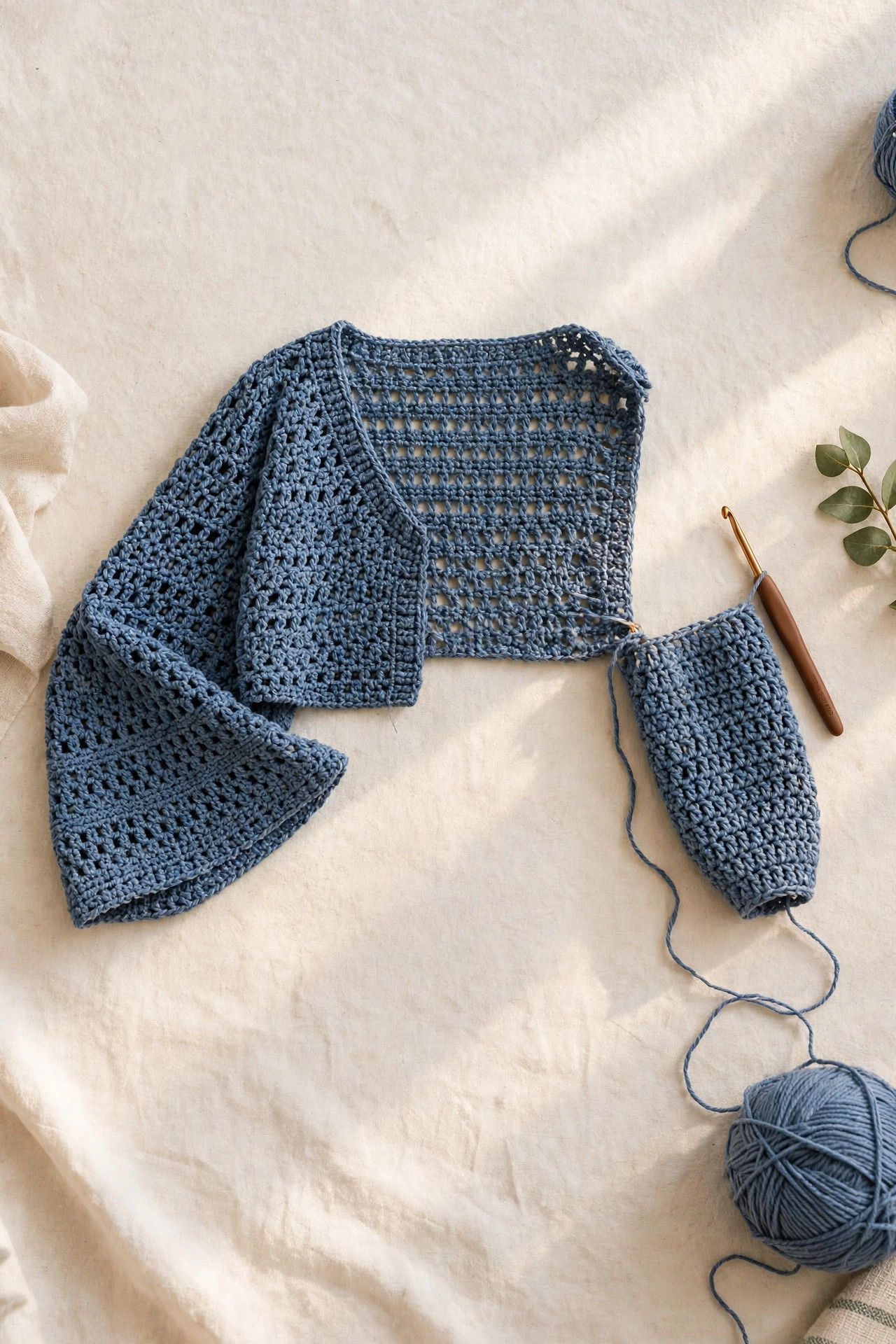
Here is the secret that makes shrugs so popular with beginners: most of them are a rectangle in disguise. You crochet one flat piece — as wide as your back plus both arms, as deep as the shrug should hang — then fold the two ends toward the middle and seam a short section along each folded edge. Those seams become the sleeves, and the open middle becomes the body. The bell-sleeve blue shrug adds its shaping as it goes, flaring the sleeve ends with extra stitches, but the bones are the same friendly rectangle.
Other shrugs are worked in panels — a back and two fronts, sewn at the shoulders — which gives a closer, more cardigan-like fit like the sage shrug. And the lacy ones often begin at the neckline and grow downward. All three routes share the same mercy: there is almost no shaping to go wrong, and trying the piece on as you work is as simple as wrapping it around your shoulders.
Sizing and fit
A shrug is forgiving, but two measurements decide whether it sits beautifully. The first is across the back, from wrist to wrist with arms relaxed — that is the full width of your rectangle, sleeves included. The second is how cropped you want it: shrug depth is measured from the neck down the back, and most of the photographed styles stop between the shoulder blades and the waist.
Because the classic construction has no set-in sleeves, the fit question is really about ease: a shrug should skim, not squeeze. If you are between sizes, the open-front styles forgive everything — the tie-front blue shrug most of all, since the ties simply meet wherever your body asks them to.

Materials you will need
- Yarn: DK or worsted yarn — a cropped shrug typically takes two to four balls depending on size and sleeve drama; lace styles love cotton or bamboo blends, cosy styles love wool blends
- Hook: The hook that suits your yarn and gives a fabric with drape — shrugs should fall softly, not stand up on their own
- Notions: Tape measure (your wrist-to-wrist measurement matters), stitch markers, yarn needle for the two short seams, small scissors
Tips for a shrug that drapes beautifully
- Drape is everything: if your swatch feels stiff, go up a hook size — a shrug lives on softness.
- Block before you seam: pinning the rectangle flat overnight makes the two sleeve seams land exactly where you measured them.
- Try it on at rectangle stage: wrap the unseamed piece around your shoulders and pin the sleeve seams with markers first — adjust before you commit yarn to them.
- Mind the sleeve length: bell sleeves keep growing visually; measure them against your arm, not the table.
- Choose the closure last: ties, a single button or a pretty brooch can all close the same shrug — decide when you can see it on.
Frequently asked questions
Is a crochet shrug beginner friendly?
The rectangle styles genuinely are — one flat piece, basic stitches, two short seams. If you can crochet a scarf, you can crochet a shrug; the garment shaping is done by the folding, not by complicated increases. Panel and lace styles ask a little more, but nothing beyond patience.
What is the difference between a shrug, a bolero and a cardigan?
Length and coverage. A cardigan covers the whole torso and fastens down the front. A bolero is cropped high, usually ending above the waist, with a tailored fit. A shrug is the loosest idea of the three — it covers the arms, shoulders and upper back and leaves the front mostly open, which is why it layers so well over dresses.
What yarn is best for a crochet shrug?
It depends on the shrug’s job. For lacy summer styles, cotton or bamboo blends give crisp stitches and cool drape. For an everyday cropped shrug, a DK wool blend adds warmth and softness. Whatever you choose, drape matters more than fibre — test your swatch over your hand and watch how it falls.
How much yarn does a shrug take?
Far less than a cardigan, which is half their charm. A cropped DK shrug typically uses two to four 100 g balls depending on size and sleeves; a lacy one can take less. Bell sleeves and longer lengths are the yarn-hungry details to budget for.
How long does a crochet shrug take to make?
A simple rectangle shrug is a few evenings of relaxed crochet; the chunky winter version can be a weekend. Lace and panel styles take longer — but compared with any full garment, every shrug on this list is a quick reward.
Save the set for your next dress day
Fifteen ways to cover your shoulders beautifully — if these shrugs have charmed you too, save the pin so the set is waiting when you need it: see the shrug patterns pin on Pinterest.
More handmade layers: the crochet poncho top is the shrug’s free-spirited cousin, and the crochet halter top is what the sage shrug wants to be worn over.
🧶 Get the Complete Pattern Book
Love patterns like this? We sell complete crochet pattern books — every book is just $1.89 right now (was $6.90).
📚 Browse the Pattern Books

 By